The ongoing chronicles of misleading nineteenth-century titles
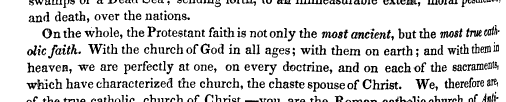
A few months back, I noted that searching for Anglo-Jewish periodicals on GoogleBooks turned up many titles that sure looked like they were Jewish, but were actually evangelical Protestant. The Victorians also liked to score polemical points by using the other side's shibboleths: e.g., Father Clement: A Roman Catholic Tale (not a Roman Catholic novel, but an anti-Catholic novel), as opposed to The Converts; A Tale of the Nineteenth Century: Or, Romanism and Protestantism Brought to Bear in Their True Light against One Another (not an anti-Catholic novel, but a Roman Catholic novel). This afternoon, I finally managed to pick up a volume of a late-Victorian periodical, The True Catholic--which was, of course, a dedicated evangelical journal, and passionately anti-Catholic to boot. The title draws on one popular line of attack for anti-Catholic controversialists, dating all the way to the Reformation itself: insisting that the term "Catholic," by definition, could not refer to any single visible church, but instead meant all churches (past and present) that witnessed to the eternal truths recorded in the Scriptures. Because the Roman Catholic Church had deviated from "primitive" Christian truths--the usual accusation directed at transubstantiation, for example--it could not be truly "Catholic." For a nineteenth-century example, here's W. C. Brownlee, a Reformed clergyman: